How to match new concrete to existing surfaces
New concrete will rarely match old concrete exactly, and that is normal. Age, weathering, a different batch and years of sun all change how a slab looks. We can blend the two closely with colour, finish and smart joint placement, and sometimes resurfacing is the better path.
Why new concrete rarely matches old
Concrete is a natural, site-made material. Every pour is a little different, and that is exactly why an old slab and a new one seldom look identical.
Several things drive the difference:
- Cement batch – colour varies slightly between deliveries, even from the same plant.
- Mix design – the sand source, the stone and the water content all shift the shade.
- Curing conditions – the weather on the day, and in the week after, changes how the surface sets.
- Age and weathering – years of Queensland sun, rain and traffic lighten and dull an old slab.
- Sealing and wear – an old surface may have lost its sealer, while a fresh pour has not weathered at all.
So when we pour a new section beside a 10 year old driveway, the new concrete starts life brighter and often greyer. It will settle and darken over the first year or so, but it will always carry its own history.
What a good match realistically looks like
Honesty up front saves disappointment later. A perfect, invisible join between old and new concrete is not something any concreter can promise. Anyone who does is overselling.
What we can achieve is a close, considered blend that reads as intentional rather than patched. From a standing height, on a well-planned job, most people will not pick the join. The aim is harmony, not a seamless illusion.
The bigger the colour and age gap, the harder the match. A pour next to last year’s slab blends far more easily than a pour next to a slab from a decade ago.
Techniques we use to blend new with old
There are several levers we pull to bring new and old closer together.
Match the finish first. Colour matters, but texture matters more. If the old slab is broom-finished, we broom the new one the same way and in the same direction. If it is exposed aggregate, we select a similar stone and expose it to the same depth.
Add colour to the mix. A coloured concrete oxide can nudge a fresh pour towards the warmth of a weathered slab. We can also use surface colour hardeners for finer control.
Seal to even things out. A quality sealer deepens and unifies colour. Sealing both the old and new sections together often does more to blend them than any other single step.
Let it weather. Sometimes the smartest advice is patience. A new pour that looks too bright in month one usually settles close to its neighbour within a year.
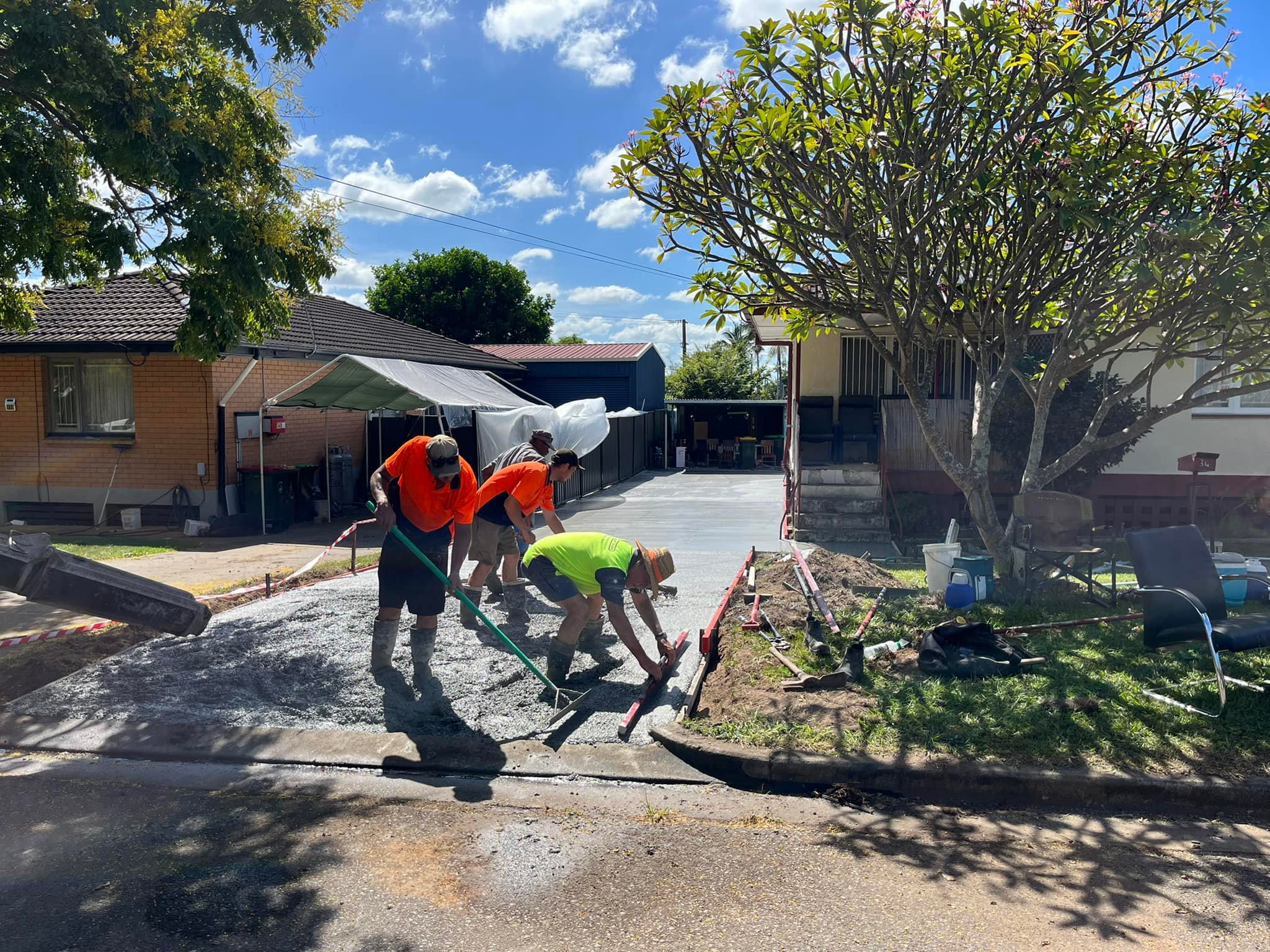
When we extend a path or add a new concrete pathway beside an existing one, these small choices are what make the two read as a single, planned surface.
When a control joint is your best friend
Here is a trade trick that solves more matching problems than any colour ever will: put the join where it belongs.
Concrete naturally wants to crack along its weakest lines. We control that with joints. When we tie new work to old, we place a clean control joint or an expansion joint right at the meeting point. That joint does 2 jobs at once:
- It gives the slabs room to move independently, which prevents cracking.
- It creates a deliberate visual line, so a slight colour change reads as a design break rather than a mismatch.
A crisp, straight joint at the transition tells the eye the change is meant to be there. It is a simple idea that makes a real difference on driveways and paths alike.
When to resurface instead of patch
Sometimes matching a small repair to a large, tired slab is a losing battle. If the existing concrete is heavily stained, patchy or worn across the whole area, a new patch will always stand out.
In those cases, resurfacing the whole area is often the better value. A resurfacing overlay or a decorative topping gives you one consistent colour and finish across old and new alike. A polished concrete or honed concrete overlay can also lift a dated surface into something modern.
Resurfacing suits you when:
- The old slab is structurally sound but looks worn
- You want one uniform colour across a large area
- You are updating the look of the home, not just repairing damage
We will always tell you honestly whether a patch or a full resurface gives you better long-term value.
Setting expectations before we pour
The best matching job starts with a clear conversation. Before any work begins, we walk the site with you, look at the existing slab and talk through what is realistic.
With over 18 years concreting across Logan, Ipswich, Brisbane’s southside and the northern Gold Coast, I have matched a lot of new work to old. My advice is always the same: plan the join, match the finish, seal it together and give it time. That approach has helped earn our rating of 4.9 stars from 37 Google reviews. Every job is QBCC licensed (licence 15372237) and fully insured.
Talk to us about matching your concrete
If you are extending a driveway, adding a path or repairing a slab and you want the new work to sit well with the old, get in touch. Send us the details and a few photos through our Bunce Concrete contact page, and we will give you honest, practical advice on the best way forward.
David Bunce
Owner of Bunce Concrete & Construction with 18+ years of concreting experience and an Advanced Diploma in Building Construction. David personally manages every project across Logan, Ipswich, Brisbane Southside, Northern Gold Coast.